



Hello and welcome to your essential guide to Russian politics and economics! This time we devote the whole newsletter—a collaboration with investigative journalist and cybersecurity researcher Maria Kolomychenko—to Russia’s unprecedented internet crackdown.
The last six months have seen a series of restrictions on internet use. While each restriction on its own may not seem like much, together they amount to a significant, new intrusion into the daily life of Russians. This is not only a question of censorship. It’s about access to basic online services, and a dramatic—likely permanent—process of de-digitalization.
⌛️ This newsletter contains 1976 words—it will take about 10 minutes to read.
Creeping restrictions hand power to FSB
In recent weeks, it has become clear that the Kremlin is moving from selective shutdowns and targeted internet interference to the implementation of what has been dubbed “Putin’s firewall”—that is, a campaign to isolate the Russian internet from the world.
Symbolically, the government last week formally enshrined the obligation of mobile operators to shut down the internet at the request of the Federal Security Services (FSB) in a bill submitted to the State Duma. The all-powerful domestic security agency already has more than enough power to enforce its will, but the legislation will legalize existing practice—and mark the formalization of the FSB’s control of Russia’s online world.
“The country is being remade to be more manageable,” a source in contact with Kremlin officials told Faridaily. “No-one can argue with them [the FSB] anymore.”
Internet blackouts part of day-to-day reality
We can date the beginning of this year’s internet crackdown to May 8—the day before Russia marked Victory Day, a public holiday celebrating the anniversary of the Soviet Union’s defeat of Nazi Germany. Just before the start of the festivities, people all over the country started reporting mobile and fixed-line internet outages. On Victory Day itself, the shutdowns hit Moscow, where the internet was out for most of the day. Muscovites are accustomed to online taxi and food delivery services, as well as contactless payments via smartphones. These were all unavailable without the internet.
Online shutdowns are a well-known tool of authoritarian regimes. However, until now, they were rare in Russia. Before the full-scale invasion of Ukraine, there were only a couple of such cases: one in the North Caucasus region of Ingushetia in 2018 when internet access was cut during protests against a border agreement; the other in parts of Moscow in 2019 during opposition demonstrations. After the start of the war, shutdowns gradually became more common—particularly in regions bordering Ukraine.
It appears that the Kremlin was happy with its May “experiment,” and internet shutdowns have since become part of everyday life. In May, there were 69 instances of outages across Russia, rising to 662 in June, and over 2,000 in both July and August, according to data collated by the NA SVYAZI internet research project. In October, there were 1,800 outages. Residents of a country that once prided itself on its digitalization now need to withdraw cash in advance, download maps onto their smartphones, and order taxis by ringing up taxi firms.
The official explanation is that outages are needed to protect against Ukrainian drone attacks. While there is likely some truth to this claim (drones can use mobile towers for navigation), it’s also evident that the Kremlin is exploiting security concerns to extend its control over the internet. Tellingly, internet outages have occurred in regions thousands of miles from Ukraine (and the routes taken by Ukrainian drones)—including Russia’s Far East.
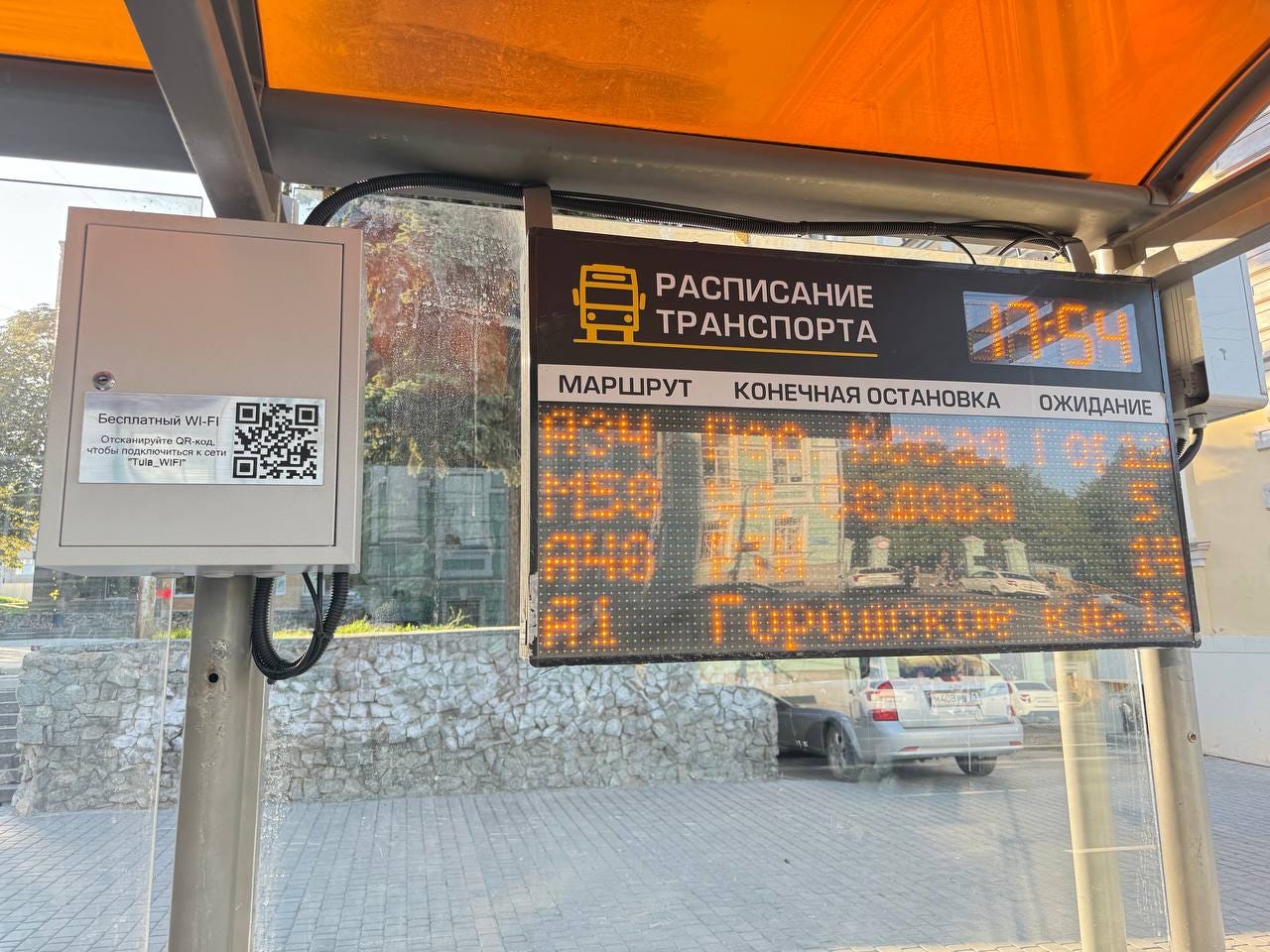
In some regions, mobile internet has been switched off for months. For example, it has been unavailable in Udmurtia since the summer. A resident of the Udmurt capital, Izhevsk (a major site for Russian defense production), told Faridaily he was used to going into cafes and shops to use the Wi-Fi in order to read the news, or order a taxi. Similarly, there has been no mobile internet in the city of Volgograd for a month—and it’s unclear when (or if) it might be restored. Reports suggest local providers have been inundated with requests for fixed-line internet, use of cash is widespread, and schools no longer have a problem with kids being addicted to their smartphones. And in the city of Tula south of Moscow, the authorities are installing public Wi-Fi at bus stops.
As the number of shutdowns has ballooned, officials in at least 57 regions have introduced so-called “whitelists”—a list of websites that are unaffected. These include government portals, some banking apps, social networks, messengers, streaming services, and marketplaces. Some fear whitelists could soon become the day-to-day online reality for most Russians.
The unstoppable rise of ‘Russia’s WeChat’
Just a few weeks after the May shutdowns, Russia’s Digital Development Minister Maksut Shadayev told President Vladimir Putin that messenger MAX, which had been launched a few months earlier by internet company VK, would be transformed into a “national messenger” similar to China’s WeChat. MAX could, Shadayev promised, provide government and banking services, be a platform to sign sales and lease agreements, and serve as a digital ID.
A few weeks later, Russia passed a law integrating MAX with Gosuslugi, the widely-used government services portal, and the Goskey electronic signature service. Putin also issued a directive for the government to support MAX.
However, a Kremlin-led PR campaign to promote MAX has been dogged by public suspicion—particularly when it comes to MAX’s relationship with the FSB. This centers on Internet company VK, which created MAX and is more famous for its social media network Vkontakte (Russia’s “equivalent to Facebook”). VK is ultimately controlled by state-owned gas giant Gazprom. In 2018, case materials from the criminal prosecution of Vkontakte users showed VK had provided data to law enforcement without court orders.
As a result, many believe MAX is tracking its users, harvesting data from smartphones, and sharing chats and calls with the FSB. Since MAX is a closed-source app, some of these claims are impossible to confirm. Perhaps tellingly, a State Duma deputy claimed in September that MAX “does not spy on users.” VK said in October that MAX has 50 million registered users.

Squeezing WhatsApp and Telegram
As the development of MAX continues apace, so discussions about blocking WhatsApp (Russia’s most popular messaging app with 97.4 million monthly users), and Telegram (90.5 million monthly users) have intensified. The authorities have long been irritated by the failure of WhatsApp and Telegram to localize Russian user data, as well as their refusal to provide user data to the FSB. Given that online watchdog and censor Roskomnadzor last year blocked Viber—Russia’s third most popular messenger— discussions about banning WhatsApp and Telegram should be taken seriously.
In August, Roskomnadzor blocked voice calls in WhatsApp and Telegram. Although the official explanation was that this was necessary to stop scammers, data from Russia’s Central Bank shows scammers use mobile and landline calls three times more often. While some said the curbs are part of an effort to push Russians toward MAX by degrading the functionality of its competitors, others pointed out that Russian telecom operators have long advocated to limit internet calls as they make fixed-line phones less profitable.
At the end of October, Roskomnadzor began experimenting with total blocks on Telegram and WhatsApp in some regions (justifying the move by citing the need to fight scammers). It also emerged mobile operators were blocking the text messages and calls that WhatsApp and Telegram use to verify new users.
Fines for searching for ‘extremist content’
Perhaps the most widely discussed element of Russia’s online crackdown was a Sept. 1 law imposing fines of up to 5,000 rubles ($62) for “intentionally searching” for “extremist materials” online. This was an immensely significant step: Russia has never previously punished people for consuming blocked content, or using prohibited services—in effect, simply for reading.
As with many Russian laws, the text is vague, leaving ample room for interpretation. The country’s official list of “extremist material,” which is managed by the Justice Ministry, currently includes over 5,000 entries, including books, films, articles, and songs—meaning users could be fined for searching for content without knowing it has been designated extremist.
One of Russia’s most well-known extremist organizations is the Anti-Corruption Foundation founded by opposition politician Alexei Navalny, who died in a Russian prison in 2024. Under the new law, just searching for YouTube investigations by the Foundation is an offense.
So far, the only known prosecution has been of a student from the Ural Mountains city of Kamensk-Uralsky, who is accused of searching for information about Ukraine’s Azov regiment, and a Ukraine-backed paramilitary group reportedly made up of Russian citizens. How exactly the user’s search history ended up in the hands of the FSB is unknown.
Intensifying the fight against VPNs
In recent months, the Kremlin has stepped up its efforts to block Virtual Private Networks (VPNs), which Russians are dependent on to get around online censorship. According to pollster Levada Center, 20 percent of Russians use VPNs—a figure that rises to 40 percent among young people. While VPNs remain legal, the authorities took the first step toward criminalizing them in July by making use of VPNs an “aggravating circumstance” in Russia’s Criminal Code. No-one has yet been prosecuted under this provision, but it’s likely it will be used to boost the punishments meted out in cases against those accused of “searching” for “extremist material” online.
SIM-cards blocked after trips abroad
Earlier this month—with only a few days advance warning—Russia blocked people from using their SIM cards on returning from a trip abroad. Again, the reason given by officials was to combat Ukrainian drones that use mobile internet to navigate. As of Nov. 10, if a SIM has used international roaming services, when it crosses the border into Russia it will be unable to access mobile internet, and text messaging services, for 24 hours. This applies to both foreign, and Russian-issued, SIMs. On paper, you can lift the block by completing a short online check, but there have been complaints that this service is frequently inaccessible.
Adaptation, not resistance
The Russian internet is steadily evolving into a closed ecosystem built around domestic services (especially messengers and social networks), where security—at least as defined by the state—takes precedence over freedom.
Of course, the measures introduced this year will cause inconvenience for millions of Russians. The source in contact with Kremlin officials said the country’s security establishment “does not understand” that internet restrictions risk pushing young Russians to emigrate.
And a survey published earlier this month by the state-controlled VTsIOM pollster showed that 40 percent of Russians are opposed to internet controls (compared to 25 percent who support them). Among young people, opposition rises to 60 percent.
Nevertheless, there is no prospect of any serious resistance, or anger directed at the Kremlin. “People are obliged to accept all the restrictions,” said an executive at a Russian internet company. “Firstly, because they are presented as security measures, and, secondly, because there is no way to resist.” A different internet company executive added: “This is the new reality we’ll have to get used to—there are never rollbacks or relaxations in our country.”
It appears Russians have become accustomed to the creeping digital restrictions and, for the most part, see them as just another part of everyday life. Some believe they are genuinely needed for security reasons; others do not want to risk imprisonment in order to express their unhappiness. Either way, the focus for most is on adapting, rather than resisting.
Thanks for reading! We always welcome comments, questions, and feedback. If you would like to get in touch, message us at faridaily@proton.me. Finally, if you know someone else who might also enjoy this newsletter, please spread the word!