


Hello and welcome to your essential guide to Russian politics and economics—written by Farida Rustamova and Margarita Liutova.
This is the first of our premium newsletters that are only available in their entirety to paid subscribers. For a limited time, we’re pleased to offer an early-bird discount on upgrading your subscription. Don’t miss out!
This time we are looking at:
Why the Kremlin’s decision to call-up Russia’s reservists for mandatory military service is a covert form of mobilization;
How the end of Russia’s economic boom is affecting consumers.
We also briefly examine the governor KPIs that the Kremlin will likely use in next year’s parliamentary elections, and a crackdown on Halloween celebrations.
⏳ This newsletter contains 1859 words—it will take about 9 minutes to read, and you can subscribe in less than a minute.
Kremlin fears Ukrainian drones—and the word ‘mobilization’
The Russian authorities will call-up the country’s reservists in order to better guard key infrastructure sites from Ukrainian attacks.
Russia is poised to mobilize about 30,000 reservists as it struggles to find the manpower to deal with Ukrainian drone attacks. Russian President Vladimir Putin signed a law on the use of reservists Tuesday after legislation was rushed through parliament. Putin will also shortly issue a special decree (as required by the law), and an official told Faridaily the government will publish a document clarifying the call-up procedure.
While such a step is—in effect—a form of mobilization, no formal documents use the word “mobilization.” Officials are also careful to avoid the term. The Kremlin is wary because Russia’s partial mobilisation in 2022—in which about 300,000 men were drafted as the army suffered battlefield reversals—led to a drop in Putin’s popularity.
Russia’s decision to tap its military reservists for the war effort is not only a recognition that Ukraine’s summer drone campaign has succeeded in inflicting serious damage. It is also yet another sign that the Kremlin is not in the market for compromise when it comes to negotiations with the West, and has not renounced its maximalist war aims.
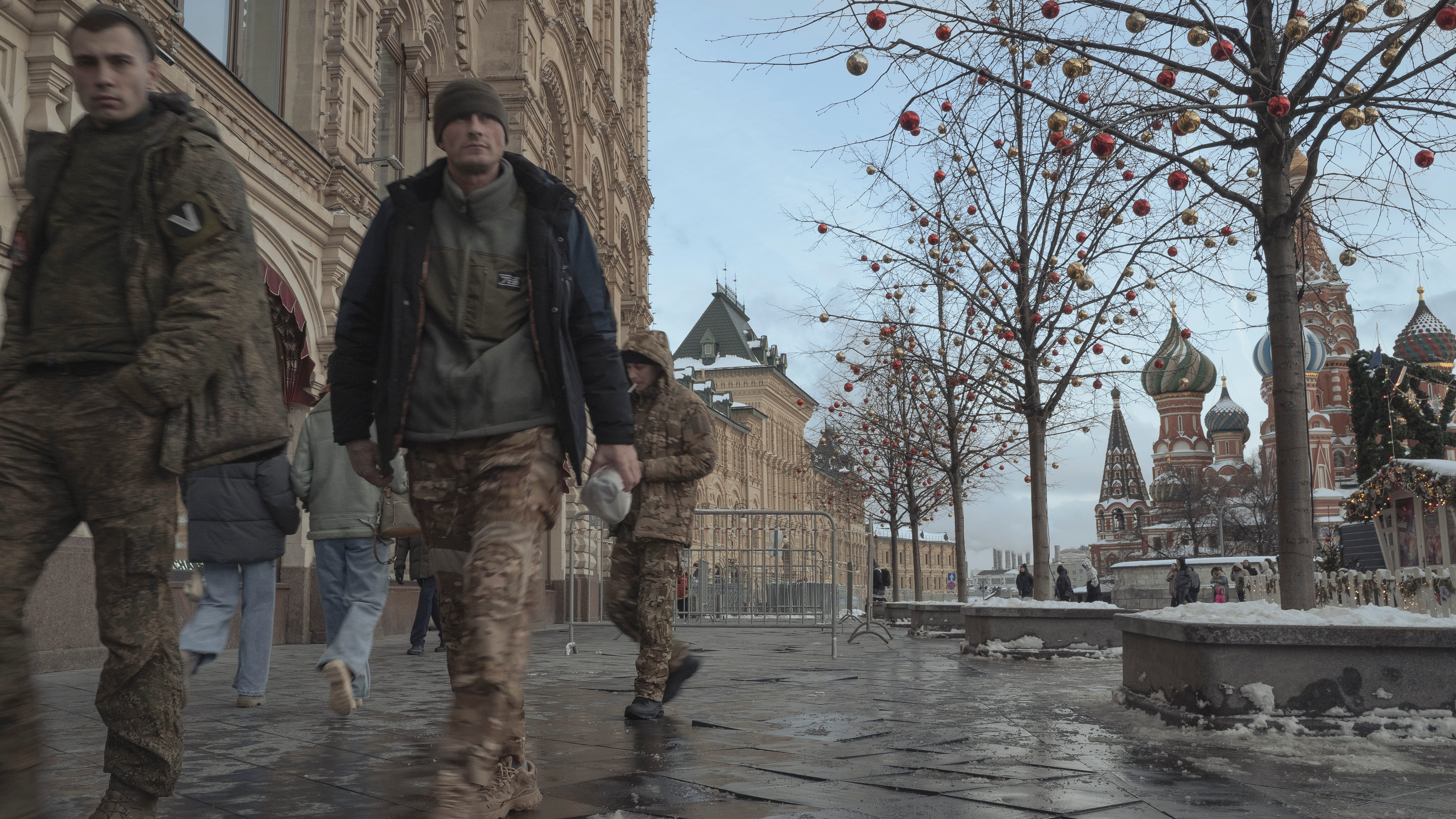
The legislation on reservists signed by Putin earlier this week was not explicit about how reservists would be used. Instead, it stated they will be sent to special “training camps” in which participation will be mandatory. However, it’s clear that this actually means reservists will be deployed to guard infrastructure facilities across Russia.
Russia’s military reserve, which was set up in 2015, is the equivalent of the United States Army Reserve, or the United Kingdom’s Territorial Army. Reservists are those who have experience in the army or security forces, and have signed a contract of up to five years with the Defense Ministry, the National Guard, or another security agency.
In peacetime, reservists are only required to attend annual training camps. For the rest of the year, they live like ordinary civilians. Current monthly pay with the Defense Ministry is usually up to 9,700 rubles ($120). However, in regions bordering Ukraine, it can be higher.
Officials have not hidden that the need for reservists is a result of Ukraine’s drone strikes on oil refineries, which have sent gasoline prices soaring 13 percent this year. The legislation was proposed by the Defense Ministry, and passed by parliament in just two days.
“The situation is difficult,” Anatoly Kartapolov, head of the State Duma’s Defense Committee, said last week. “The country is under regular enemy drone attack.” According to Kartapolov, it’s not only oil refineries that need defending, but also other infrastructure sites. He said there were not enough National Guard, police, and military personnel to do the job.
The number—and frequency—of Ukrainian drone raids have increased significantly this summer. While many of the attacks have been on oil refineries, other infrastructure targets have also been hit. For example, the southern Russian port of Tuapse was attacked last week, reportedly causing damage to moored vessels, and an oil pipeline.
How many reservists will be called up? Could they be sent to Ukraine?