


Hello and welcome to your essential guide to Russian politics and economics! This time we look at:
Why the Kremlin has decided to shut down Moscow’s Gulag History Museum and replace it with one pushing a propaganda narrative about World War II;
The problems faced by Ukraine war veterans and what the Kremlin is doing to try help them re-integrate into society.
We also highlight data suggesting further labor market weakening, the nationalization of a major ball-bearing factory, and increasing pressure against Telegram founder Pavel Durov.
⏳ This newsletter contains 2217 words—it will take about 11 minutes to read.
Translated and edited by Howard Amos.
This month, we became a Substack bestseller! This is a major achievement for us, and we are incredibly grateful to our subscribers for their support.
Gulag museum closure a watershed moment
The shuttering of the widely-praised, state-owned Gulag History Museum highlights the ever-growing influence of Russia’s security services.
Moscow City Hall announced last week that the capital’s Gulag History Museum will be shut down after nearly 20 years of commemorating the darkest page of Soviet history. In its place, a museum will be opened about Nazi crimes during World War II, and the so-called “genocide of the Soviet people.” In keeping with the times, it will be headed by a veteran of the war in Ukraine.
The Gulag History Museum was the only major state-run institution commemorating Stalinist repression, and its replacement by a museum promoting a propagandistic interpretation of World War II is a pivotal moment in Russia’s cultural and political life that vividly illustrates the dominance of the security services, and their ultraconservative political allies. Yan Rachinsky, chairman of veteran human rights and history organization Memorial, said the closure was like “spitting on the graves of the victims of state terror,” and a shameless bid to “destroy memory that is inconvenient for the current government.”
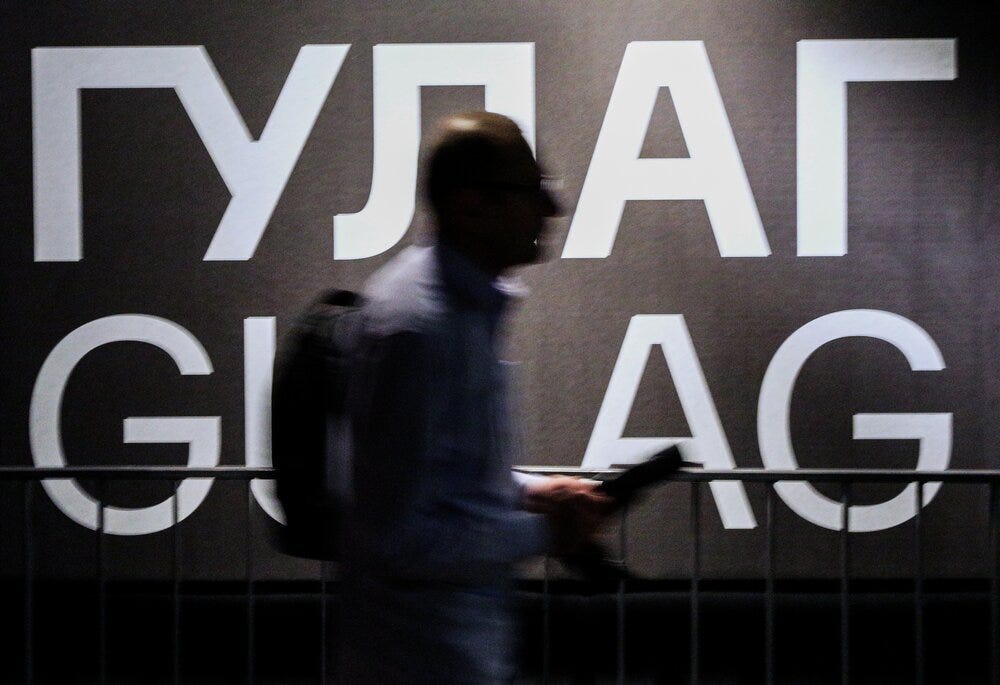
The first indication of problems for the Gulag History Museum came in late 2024 when its work was suspended under the pretext of “fire safety violations.” According to our sources (and reporting by The Moscow Times), this was ordered by the Kremlin, and the Federal Security Service (FSB). The trigger was apparently a “Prayer of Memory” at which participants read aloud the names of victims of repression. A similar event, “Returning the Names,” was previously organized by Memorial prior to the organization’s ban in 2021.
Neither Moscow Mayor Sergei Sobyanin, nor City Hall (which formally owns the museum) have commented in detail on last week’s announcement. They simply published a press release describing the new Museum of Memory.
“They disbanded and remade a non-functioning museum in the spirit of the times,” a source close to City Hall told Faridaily.
The source also said Kremlin aide Vladimir Medinsky, a former culture minister and participant in Ukraine ceasefire negotiations, played a key role in the decision. Medinsky heads the Russian Military Historical Society (RMHS), an influential historical propaganda group that has helped establish several museums about the “genocide of the Soviet people” in World War II.
The Gulag History Museum was set-up by City Hall in 2001, and the first head of the museum was dissident Anton Antonov-Ovseenko, who spent a total of 13 years in Soviet camps and prisons. Under Sobyanin (whose grandfather was repressed in 1937), the museum was moved from its original home in a converted apartment near the Kremlin into a newly-renovated four-storey building. Under its second director, Roman Romanov, it became a rare example of a internationally-renowned Russian state-owned museum, with some journalists comparing it to Berlin’s famous Jewish Museum. In 2021, it was awarded the Council of Europe Museum Prize for institutions making a significant contribution to the “understanding of European cultural heritage,” and “the promotion of respect for human rights and democracy.”
The museum that will open on the vacated site will be much more in line with the Kremlin’s view of the past. In recent years, Russia has heavily promoted the idea of a “genocide of the Soviet people,” an entirely new concept. Historian Konstantin Pakhaliuk, who was dismissed from the RMHS in 2023, has said that the idea helps counter-balance the belief that the Soviet Union helped to start World War II. “It allows them to say: ‘We are the main victors in this war, and we are also the main victims’,” Pakhaliuk said.
Russian President Vladimir Putin first mentioned this “genocide” in July 2020. In October 2022, a Russian court designated the siege of Leningrad as genocide, and, last year, Russia passed a law “On Perpetuating the Memory of the Victims of the Genocide of the Soviet People.” Now, the State Duma looks set to approve legislation that would make publicly denying the “genocide of the Soviet people” a crime punishable by up to five years in prison.
Since he came to power, Putin’s views of Stalin, who presided over the murder and imprisonment of millions of Russians, have evolved. In the early 2000s, Russian officials generally avoided open praise of the brutal leader, and even occasionally leveled criticism. Putin met repeatedly with Alexander Solzhenitsyn, who wrote The Gulag Archipelago, before the author’s death in 2008. And, as recently as 2017, Putin attended the unveiling of the “Wall of Sorrow,” a memorial to victims of political repression in downtown Moscow.
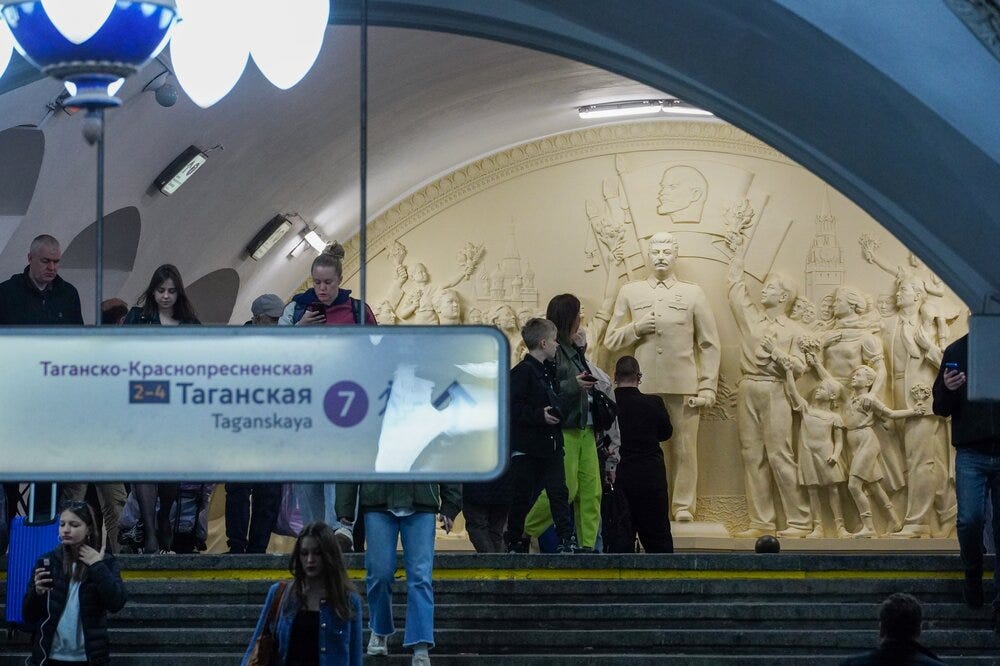
However, much has changed since the full-scale invasion of Ukraine. Most of the estimated 131 monuments to Stalin erected in Russia under Putin have appeared amidst the fighting, and the first such Stalin statue in Moscow was put up in the metro last year. The Kremlin’s position on the Gulag History Museum was expressed on Wednesday by Putin adviser Valery Fadeev, who heads the Presidential Commission on Commemorating Victims of Political Repression (which last met in 2019). “Some [security officials] are beginning to think the topic of repression is being used by Russia’s enemies,” Fadeev told Kommersant newspaper.
Despite appearances, the Kremlin has not yet completely renounced the idea of honoring the memory of Soviet-era victims of political terror. But, as present-day repression intensifies, the topic is increasingly awkward. It’s far easier to focus on erasing “negative” memories, and promote a creeping rehabilitation of Stalin.