



Hello and welcome to your essential guide to Russian politics and economics written by Farida Rustamova and Margarita Liutova. This time we focus on:
Why is it extremely unlikely that a Putin-Trump meeting will lead to a ceasefire in Ukraine? We talk to our sources in Moscow.
We also look at how a major cyber-attack on Aeroflot revealed the IT vulnerabilities of Russian companies, why the government is mulling food price regulation, and pay tribute to a defining figure of post-Soviet Russian journalism: Derk Sauer, who died last week.
⏳ This newsletter contains 2135 words – it will take about 10 minutes to read.
We are always delighted if you want to share our reporting! If someone has forwarded this email, you can subscribe here.
Confident Putin unlikely to compromise in face-to-face with Trump
A meeting between Putin and Trump would almost certainly not achieve a peace deal for Ukraine—but it could still provide some political gains for both men.
To much surprise, United States Envoy Steve Witkoff’s visit to Moscow on Wednesday yielded an agreement that the U.S. President Donald Trump and his Russian counterpart Vladimir Putin will meet in person—perhaps as early as next week. The last such presidential-level meeting between Russia and the U.S. took place in June 2021 in Switzerland, 8 months before the full-scale invasion of Ukraine. Back then, Putin met with Trump’s predecessor, Joe Biden. He has not met Trump (at least publicly) since 2019.
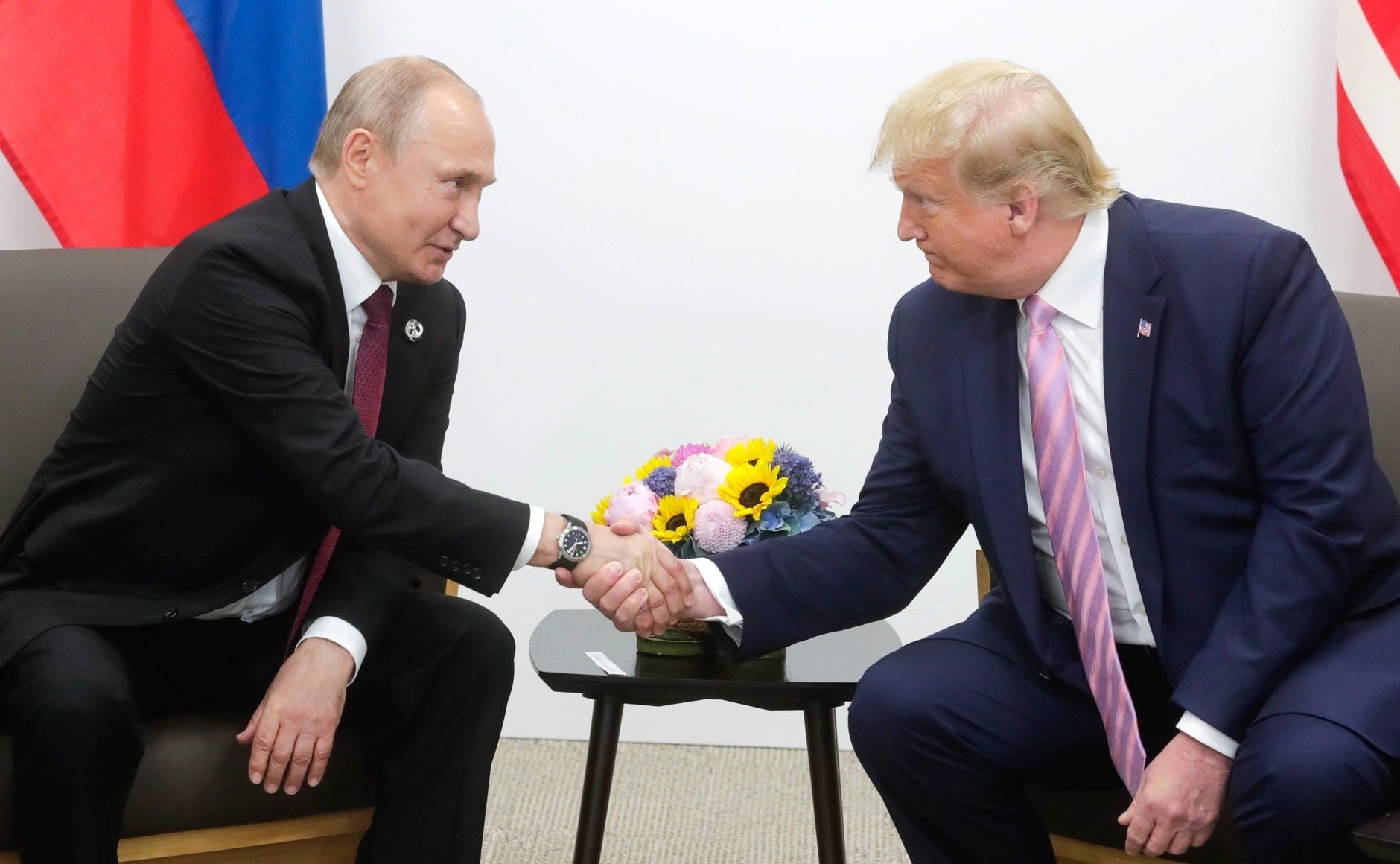
It’s unclear where the meeting might take place. But Putin has avoided flying through the airspace of states he sees as hostile ever since the full-scale invasion of Ukraine.
The summit appears to be a fresh attempt by Washington to try and bring an end to the fighting in Ukraine. Trump has been trying, unsuccessfully, to do this ever since he was inaugurated as president six months ago.
The most recent phone call between Putin and Trump (which took place on July 3) was “terrible,” said a Russian source familiar with the course of negotiations over Ukraine. “Trump wanted to discuss Ukraine, but, apparently, Putin steered the conversation toward Iran and the Middle East.” Afterward, Trump expressed public disappointment with the conversation, and the two presidents have not spoken since.
Putin has long signalled to Russia’s political and business elite that they should not expect a quick end to the war, and the lifting of Western sanctions. Before Witkoff’s visit to Moscow this week, our sources felt that even the remote possibility of ending the war, which had opened with Trump’s inauguration, was now disappearing.
“Peace is still a long way off,” cautioned a highly-placed official who meets regularly with Putin. However, he also expressed some cautious optimism about the upcoming face-to-face. “Meeting and talking is always better,” he said.
Since returning to the White House, Trump has repeatedly said he is ready to meet Putin. The Kremlin has tended to avoid directly rejecting such offers, responding instead that such a meeting must not be a Hail Mary—but be well-prepared, and guaranteed to bring results. As recently as a week ago, Putin’s spokesman Dmitry Peskov indicated no preparations for a leaders’ summit were underway. However, Trump’s critical remarks about Putin, his recent ultimatum for an end to the fighting in Ukraine (which was due to expire Friday), an exchange of nuclear threats, and the possibility of U.S. sanctions against Russia’s key trading partners (primarily China and India) seem to have changed the thinking in the Kremlin. The result was Putin’s unexpected agreement to meet.
However, this does not mean that concessions are on the cards. It is not the first time Putin has made the suggestion of a face-to-face meeting in response to international pressure. He did the same in May when Kyiv, in coordination with the U.S. and Ukraine’s European allies, demanded a 30-day ceasefire. On the back foot, Putin proposed that Russian and Ukrainian delegations meet in Istanbul (as they had done in spring 2022). In hindsight, this was obviously just a delaying tactic. The only outcome was an exchange of prisoners and war dead. Otherwise, there was no meaningful progress.
All foreign policy decisions are tightly controlled by Putin. Our sources in the government have repeatedly said Putin only discusses the Ukraine war with a narrow circle of trusted advisers. Those who try to relay compromise proposals to the Kremlin are taking a risk.
“No one can even attempt to suggest compromises [in peace talks] because Putin won’t accept them, and you’ll be considered a traitor,” said the source familiar with negotiations.
Given such a decision-making system in the Kremlin, no substantive talks are possible without Putin’s direct involvement. This was illustrated by the delegation that Russia sent to Istanbul, which was led by aide Vladimir Medinsky, and was not authorized to conduct real diplomacy. Their sole purpose, it seemed, was to transmit Putin’s position.
Nevertheless, if a meeting between Trump and Putin does take place, it will be extremely difficult for Trump to secure a peace deal. There are several reasons:
Putin believes U.S. officials involved in negotiations have not yet addressed the substance of his demands, according to the highly-placed official. His primary demand is a legally binding agreement on NATO’s non-expansion. However, this has apparently not been conveyed effectively to the U.S. side.
“For some reason, Putin gave history lectures at previous meetings [with Witkoff]. And these real estate guys [Trump and Witkoff] remain convinced that the issue is territorial, not primarily about NATO,” said the source familiar with negotiations.
According to our sources in Moscow, the U.S. side does not understand that Putin cannot pause the war, even temporarily, without something he can sell to the Russian public as a win. “This war has seen too many casualties… to conclude without some kind of victory,” said a top Russian official.
Given that Russia currently holds the initiative on the battlefield, Putin’s inner circle are telling him that he should “press on to the end,” said the highly-placed official. The other source, who is familiar with the course of talks with the U.S., said that it’s possible that military commanders had assured Putin that Ukrainian resistance would collapse within a few months.
Putin not only feels confident going into the meeting with Trump because of the battlefield situation, but because of Russia's relatively stable economy, and the more-or-less healthy state of its finances.
There is no convincing evidence that Putin intends to abandon any of his maximalist demands for ending the fighting. Just a week ago, the Russian president said that the conditions he outlined a year ago for a diplomatic resolution were unchanged. These include (i) Ukraine’s renunciation of four regions, three of which are partially controlled by the Russian army, and official recognition of these territories, as well as Crimea, as Russian; (ii) neutral and non-nuclear status for Ukraine, with limits on its military power; (iii) a change in Ukraine’s political elite; (iv) the lifting of all Western sanctions against Russia.
Tellingly, throughout the negotiations with the U.S., Russia has actively pushed a bilateral agenda that is entirely separate from the Ukraine war. This focuses on cooperation when it comes to the economy, diplomatic issues like Iran, and the two countries’ space programs. That these topics will be central to the upcoming Putin-Trump meeting was evident from comments this week by Putin’s foreign policy aide, Yuri Ushakov. Notably, Russia’s special representative for economic cooperation, Kirill Dmitriev, was present during Putin’s encounter with Witkoff.
It is hard to imagine that a hastily arranged tête-à-tête between Putin and Trump will lead to significant progress in ending the war—particularly if corners have been cut in the preparation, and Ukrainian President Volodymyr Zelensky does not attend. However, it could be politically advantageous for both presidents. For Trump, it’s an opportunity to save face in a situation when he actually has few ways of pressuring Moscow, and it will also allow hom to continue to try and play the role of peacemaker on the world stage. For Putin, a personal meeting would help him to maintain a relationship with Trump, who is clearly inclined to sympathize with the Russian position. It might also distract Trump from the fact that Putin intends to continue the war for—at the very least—the next few months.
Correction: Previous version of this post misstated that Kirill Dmitriev was included in a meeting between Putin and Witkoff for the first time this week. In fact, he was also present at their meeting in April. We apologize for the error.
Finger on the pulse
Aeroflot hack sparks chaos at Moscow airports
National carrier Aeroflot was hit last week by one of the biggest cyber-attacks on Russia in recent years. Such hacks are relatively common, but the Aeroflot breach on July 28 had unprecedented consequences—dozens of flights were canceled, and Moscow airports were briefly paralyzed. The company’s losses were estimated at over $3 million. In the aftermath, pro-Ukraine hacker groups Silent Crow and Cyberpartisans claimed responsibility, and Putin’s spokesman Dmitry Peskov called it “alarming.”
The vulnerability of Russian companies to cyber-attacks has grown since the full-scale invasion of Ukraine. Amid the war, state-owned companies have been ordered to stop using foreign—primarily Western—software for security reasons, while many private companies have lost access to foreign software due to sanctions and the exit of Western companies from the Russian market. To fill the gap, many Russian software replacements were developed in a rush. Russian investigative IT journalist Maria Kolomychenko posted that this hasty transition made Aeroflot an easy target. The widespread nature of software import substitution makes future attacks just a matter of time.
At least two dozen major Russian companies have suffered from online disruption over the past month—from Russia’s national payment system (a state alternative to Visa and Mastercard) to the national postal service, and private mobile operators. The security issues affecting Russian IT highlight the difficulties of being unable to use advanced Western technologies. While developing domestic software alternatives is a priority, the process is hamstrung by little competition, and limited market capacity.
Russia mulls price regulation to counter food inflation
The Ministry of Agriculture and the Ministry of Industry and Trade have drafted a bill that introduces price regulation on food by stipulating conditions in long-term contracts between suppliers and retailers. The bill, however, is in its early stages, with officials currently gathering feedback from stakeholders. Last week, businesses indicated that they were strongly opposed, Kommersant newspaper reported.
This is not the first time the government has proposed price regulation-–indeed it is a standard response to price spikes. The latest discussions were likely triggered by rising prices for popular vegetables: potatoes, cabbage, beets, carrots, and onions. The cost of these vegetables has been rising rapidly since the start of the year. In late May, Putin publicly questioned the government about food prices. Since then, officials have made a point of regularly discussing possible solutions.
Rising vegetable prices in Russia contribute significantly to overall inflation. Typically, though, by mid-summer, the new harvest helps curb inflation, or even leads to deflation. It’s possible that, if prices do stabilize, the regulation proposals could be ditched. However, if the harvest is poor, prices will likely surge again next spring when reserves dwindle. And that would almost certainly lead to another discussion of price regulation.
Media manager Derk Sauer, who shaped Russian journalism, dead at 72
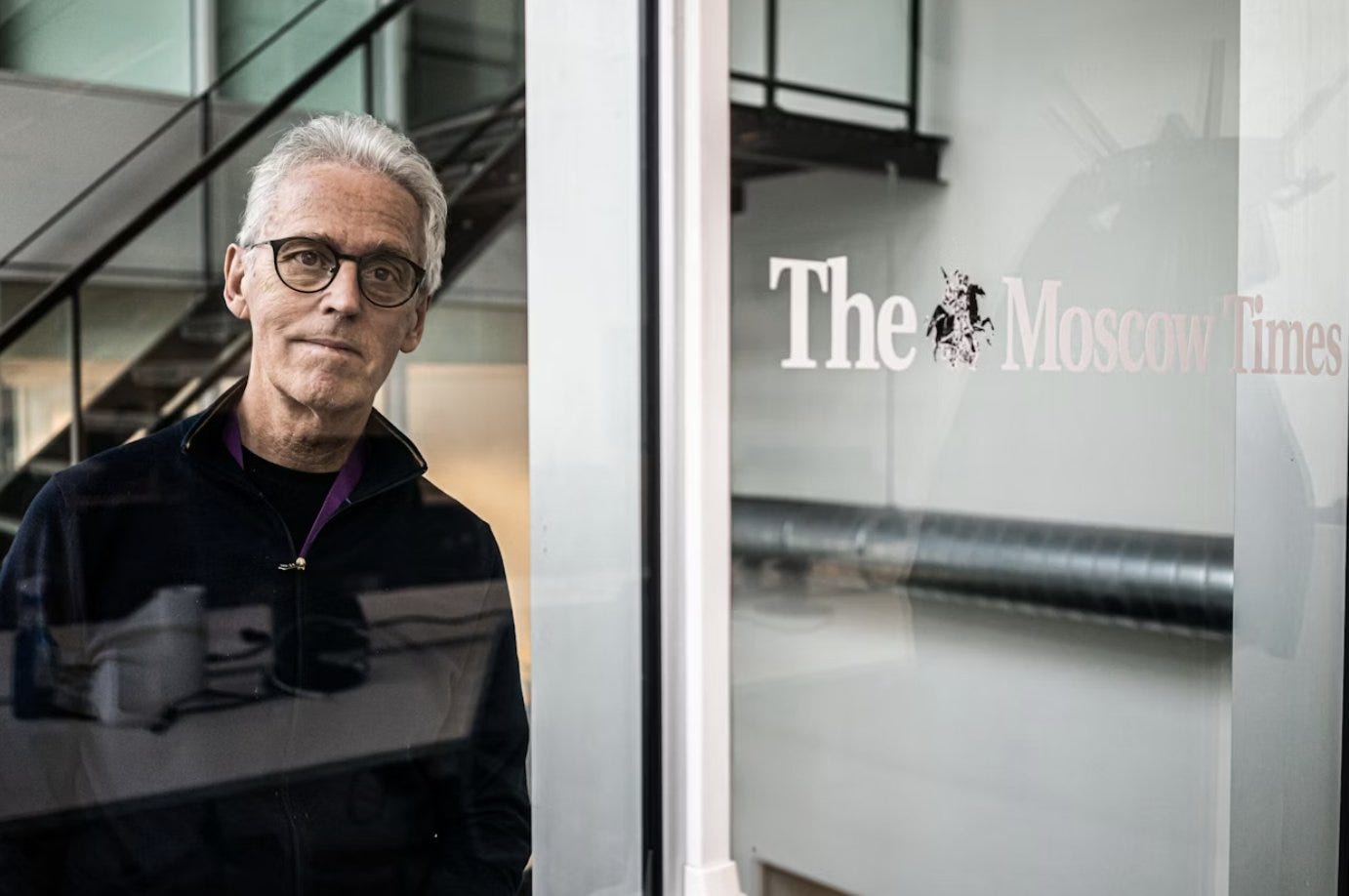
Dutch and Russian media manager Derk Sauer, who played a leading role in the formation of journalism in post-Soviet Russia, was laid to rest in Amsterdam on Thursday after his death last month following a sailing accident. Sauer had a lifelong commitment to press freedom, and it’s hard to overstate his contribution to the development of independent media after the collapse of the Soviet Union. He founded The Moscow Times in 1992, and Vedomosti (which was published in partnership with The Wall Street Journal and Financial Times) in 1999. Later, he played a key role in RBC. Everywhere he worked, he set industry standards, as well as showing that independent media was a viable commercial prospect.
After the full-scale invasion of Ukraine, Sauer left Russia. Ever since then, he helped Russian independent media outlets relocate their teams abroad, and secure funding to continue operating. Typically, one of Sauer’s final requests was for there to be no flowers at his funeral—instead, he asked for donations to The Moscow Times.
At various stages of our careers, all of us at Faridaily have worked at media outlets founded, funded, or owned by Sauer. We are immensely grateful for his contribution to our profession, and extend our deepest condolences to his family and loved ones.
Thanks for reading! We always welcome comments, questions, and feedback. If you would like to get in touch, message us at faridaily@proton.me. Finally, if you know someone else who might also enjoy this newsletter, please spread the word!
thank you for your thoughtful opinions
Not much? Putin has achieved everything he wanted:
no additional sanctions
no support for Ukraine
no additional aid for Ukraine
he is taken out from isolation and shakes US presidents hands
Trump is lost, and Europeans were able to avoid Trump' taking full of Moscow’s side barely.