


Welcome to Vlast! Yesterday we did our first ever livestream, and you can watch the recording here. In this week’s newsletter, we look at:
Why mild criticism of President Vladimir Putin by celebrity blogger Victoriya Bonya got such an extraordinary response from the Russian political elite;
The detention of top managers at Russia’s biggest publishing house and what it says about growing pressure on the book market.
We also examine Putin’s first public expression of approval for the rehabilitation of Soviet-era spymaster Felix Dzerzhsinky, and ongoing discussions about a windfall tax.
⏳This newsletter contains 2244 words and will take about 11 minutes to read. It was translated and edited by Howard Amos.
Russia’s political class obsesses over blogger’s Putin criticism
Not only did criticism of Putin by Monaco-based blogger Victoriya Bonya go viral with over 30 million views, it was taken seriously by top regime figures.
Despite the ongoing wars in Ukraine and Iran, the last ten days have seen Russia’s political class consumed by the fallout from a viral video post by a celebrity blogger that leveled criticism at President Vladimir Putin. The extraordinary response from both ordinary Russians and prominent political figures not only reflects the country’s warped political landscape, where opposition voices have been ruthlessly purged, but the entire system’s growing instability.
“Vladimir Vladimirovich [Putin], people are afraid of you. The public is afraid, bloggers and artists are afraid, governors are afraid. But you are the president of our country. I think we shouldn’t be afraid,” Victoriya Bonya said in the 18-minute video posted last week to Instagram that has since amassed more than 30 million views, and 85,000 comments.
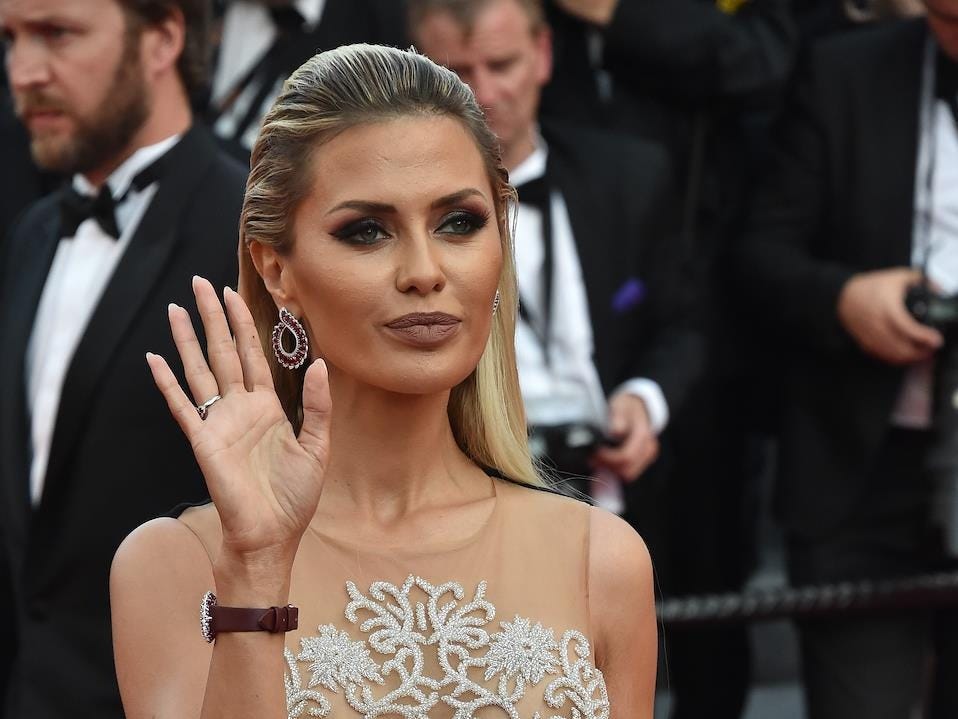
Bonya, 46, rose to fame when she participated in Dom-2, the Russian equivalent of reality shows like Big Brother or Love Island, in the mid-2000s, and she is one of the last people you would expect to be making political waves. She lives a luxurious life in Monaco, and sells cosmetics and clothing via Instagram, where she has 13.6 million followers and regularly posts scantily-clad photos. Last year, she climbed Everest.
The apolitical blogger’s mild criticism was quickly taken up by Russian politicians including the Communist Party’s aging leader Gennady Zyuganov, and it received unusual public replies from regime heavyweights including Putin’s spokesman Dmitry Peskov, and State Duma speaker Vyacheslav Volodin. It was also commented on by propagandist Vladimir Solovyov, journalist Ksenia Sobchak (who also became famous through Dom-2), a string of parliamentary deputies, and dozens of influential pro-war bloggers.
The fact that it went viral not only suggests there is significant discontent in Russia, but that traditional channels of communication with officials are no longer functioning as they once did. It’s also a testament to how Putin is distracted from day-to-day politics by the war in Ukraine, and is too busy (or too uninterested) to engage with bread-and-butter issues.
In her video, Bonya raised five critical topics that, she said, were a cause of worry for Russians: flooding in the North Caucasus region of Dagestan, an oil spill in the Black Sea, the culling of livestock in Siberia, internet restrictions, and the killing of endangered animals. She claimed that “real” information does not reach Putin, and that there is a “wall” between him and the masses.
“People are shouting at the top of their lungs now. They’ve had the last things taken from them, and it’s continuing,” she said.
Video appeals to Putin are a common genre in Russia’s personalized autocracy, where there is no independent judiciary or media—and criticism of the authorities can lead to a prison sentence. In most cases, such appeals are a sign of desperation.
Notably, Bonya said nothing about the war in Ukraine; nor did she criticize Putin directly, Instead, she said she supported the Russian leader, and that he was a “strong politician.” She subsequently distanced herself from independent Russian outlets, which had sent her inquiries about follow-up interviews, saying: “I am not a traitor; I am with the people.”
As Bonya’s address garnered millions of views, Putin’s spokesman Peskov gave an unexpectedly conciliatory—and substantive—response. Three days after her outburst, he said that the issues Bonya raised were “resonant” and that “work is being done on them.” Bonya then posted another video in tears, expressing her gratitude.

The “Bonya effect” did not end there. Speaking in parliament on Wednesday, Zyuganov expressed his support for Bonya and warned that, if the Kremlin did not heed her words, there could be a revolution. When Volodin joined the debate he was more critical. Without mentioning Bonya, he called on everyone to “stop supporting those who left the country in difficult times and are shaping hostility toward us.” For their part, pro-Kremlin bloggers accused Bonya of being a hired shill. Her main public opponent became propagandist Vladimir Solovyov, who gave an insulting tirade about her on his radio show.